
America

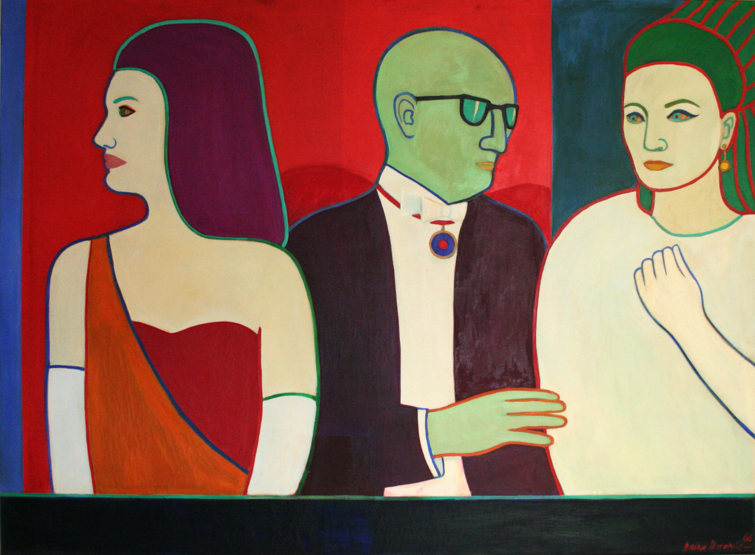


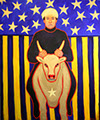






Earth Day
1971
o/c, 220x100 cm
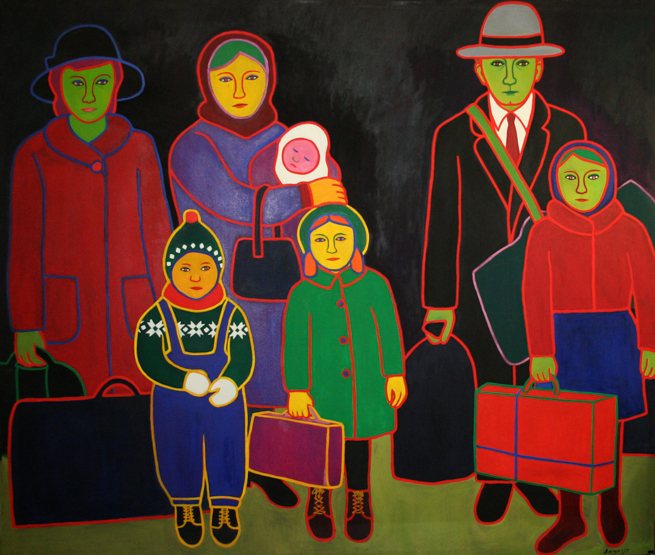
Immigrants
1969
o/c, 180x213 cm
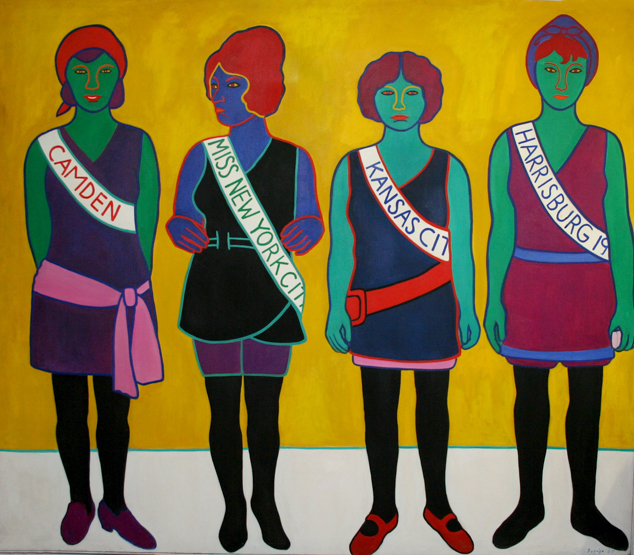
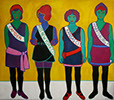
Miss America 1922
1969
o/c, 182x213 cm
New York
1969
o/c, 206x179 cm
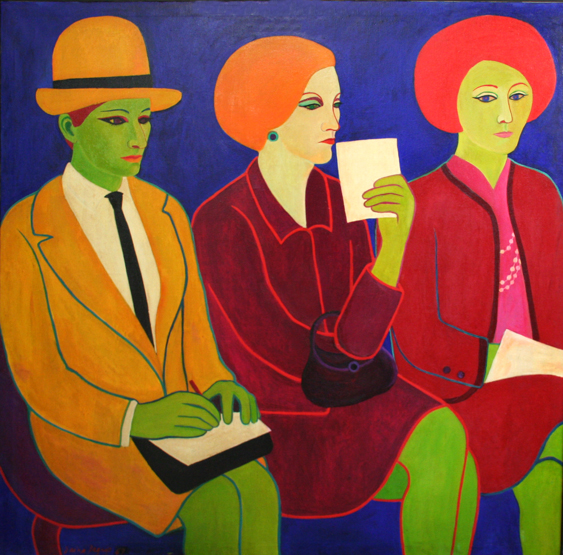
Spring Collection
1967
o/c, 152x152 cm
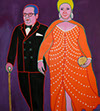
The Diplomat
1966
o/c, 132x180 cm
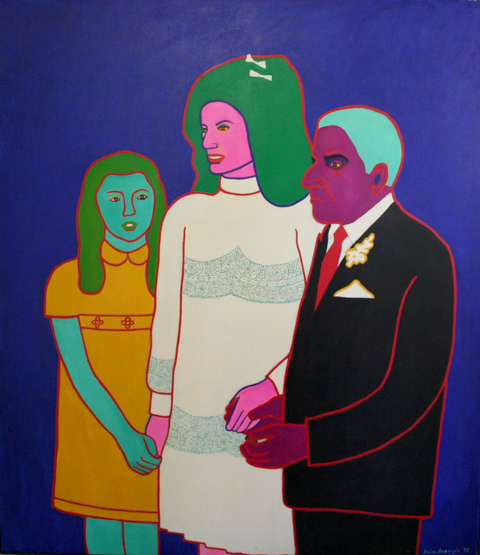
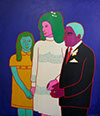
The Wedding
1970
o/c, 168x168 cm
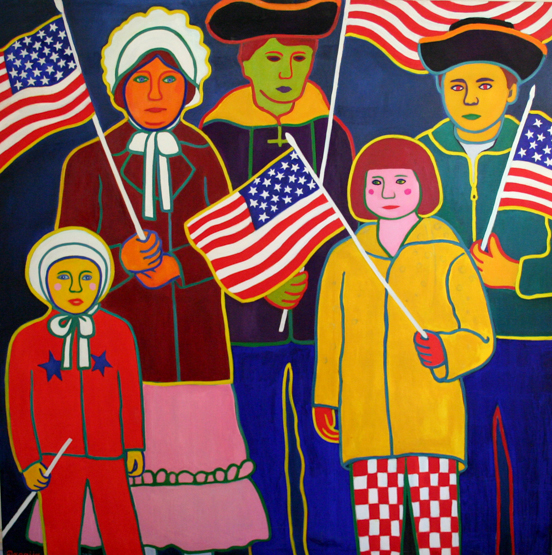
Bicentennial Parade
1976
o/c, 152x152 cm
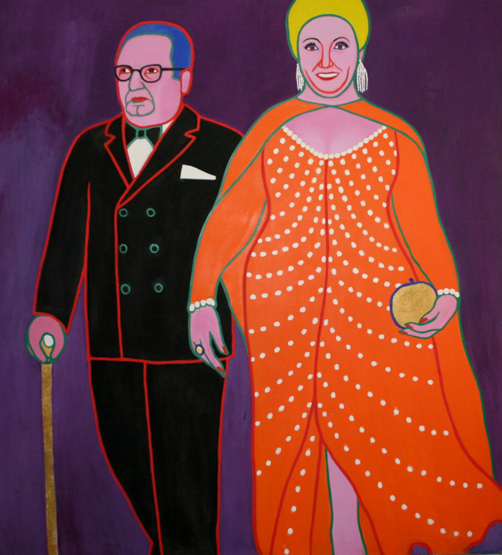
Gala
1976
o/c, 182x168 cm
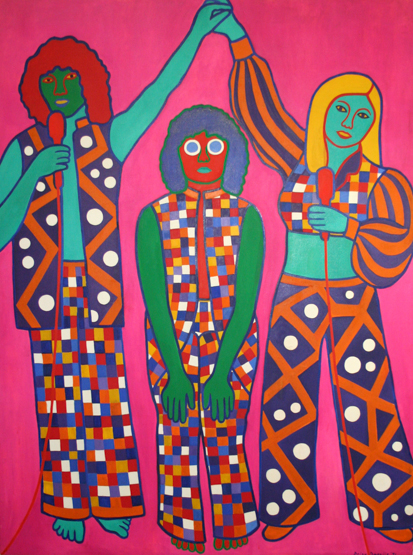
Hair
1971/1972
o/c, 220x168 cm
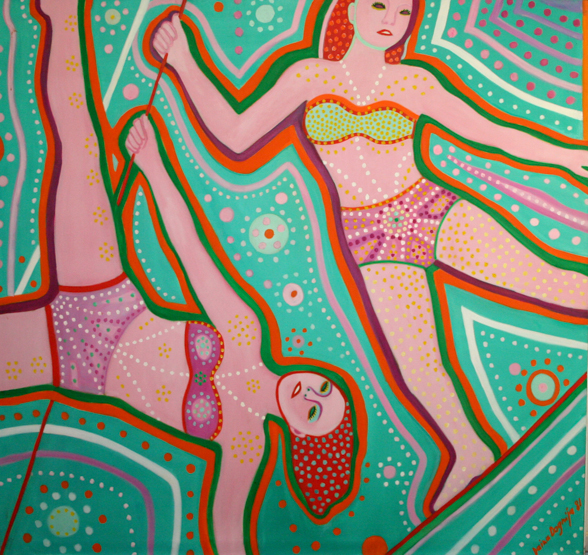
High Wire Performers
1981
o/c, 169x178 cm
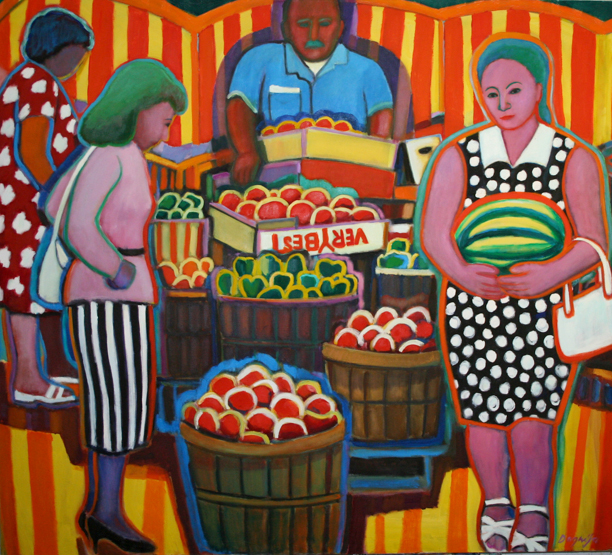
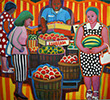
Patterson Market
1980
o/c, 179x184 cm
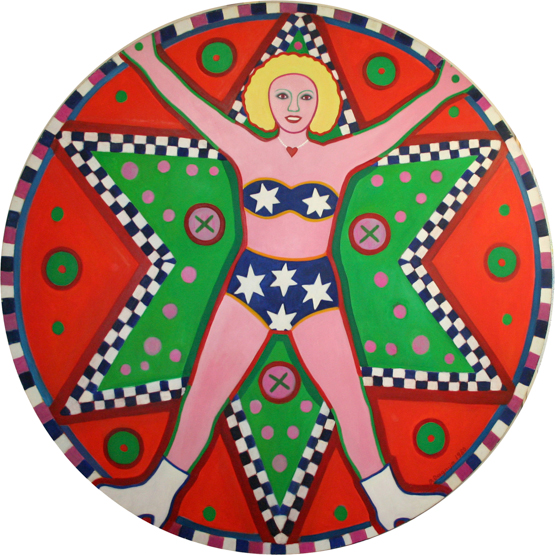
Target Queen
1980
o/c, ∅192 cm
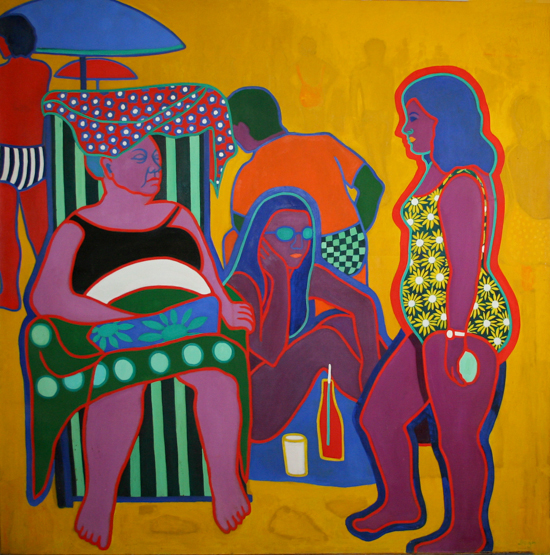
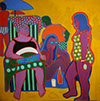
The Beach
1973
o/c, 183x183 cm
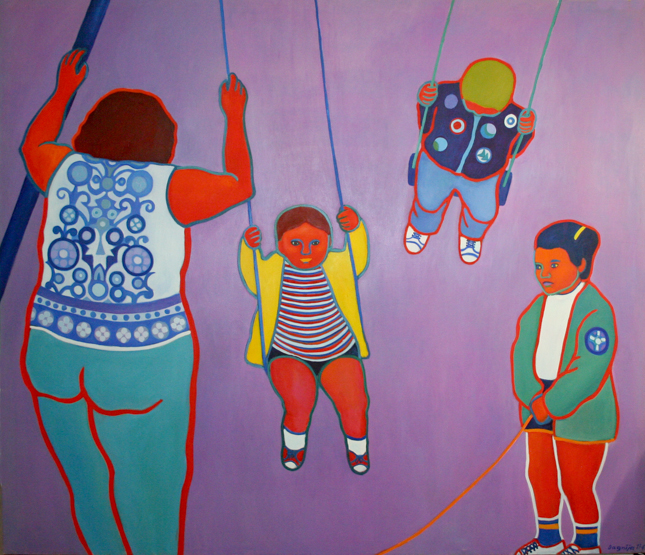
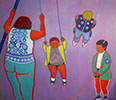
The Swings
1977
o/c, 182x213 cm
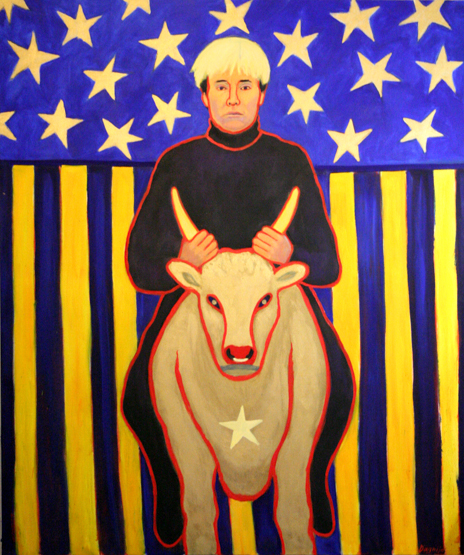
Gentlemen and Bulls 3
1977
o/c, 200x166 cm
15 - 16
<
>
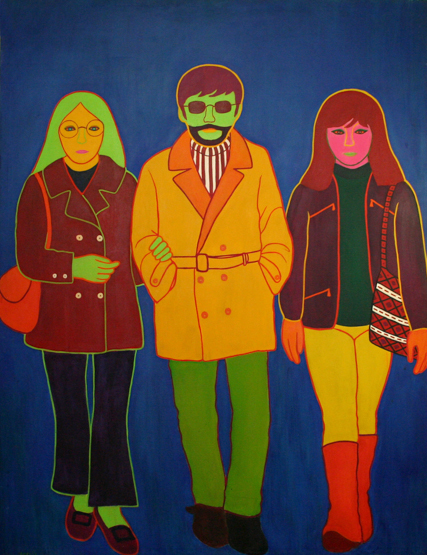
In USA Dagnija continued developing her style as she had started in Okinawa - emphasis being on the abstract language of strong forms and colors. Her subject was the modern American life around her. She painted markets, beaches, even the celebrities that were so popular in the sixties. Canvases became larger to accomodate the life-sized figures.
“The color relationships creating a vibrancy is one of the essential achievements of Dagnija’s art.”
(E. Sturma, art critic, 1981)
Women and women's place in society was a frequent theme. The “Miss America 1922” (1969) and “Target Queen” (1980) (after seing a Clint Eastwood movie) relate to feminism and Dagnija's personal observations, as do many of her themes. Being uncompromisingly independent, Dagnija always painted what and how she had to. A refugee and immigrant herself, she painted “Immigrants” (1969), "Vietnamese refugees" (1976) and "Afghan refugees" (1980) with whom she identified.
“Her style not fitting into any of the going trends, yet in its essence it relates to the spirit of the last 2 decades.”
(E. Sturma, art critic, 1981)
Website by Milda Osina